




Champion Mindset
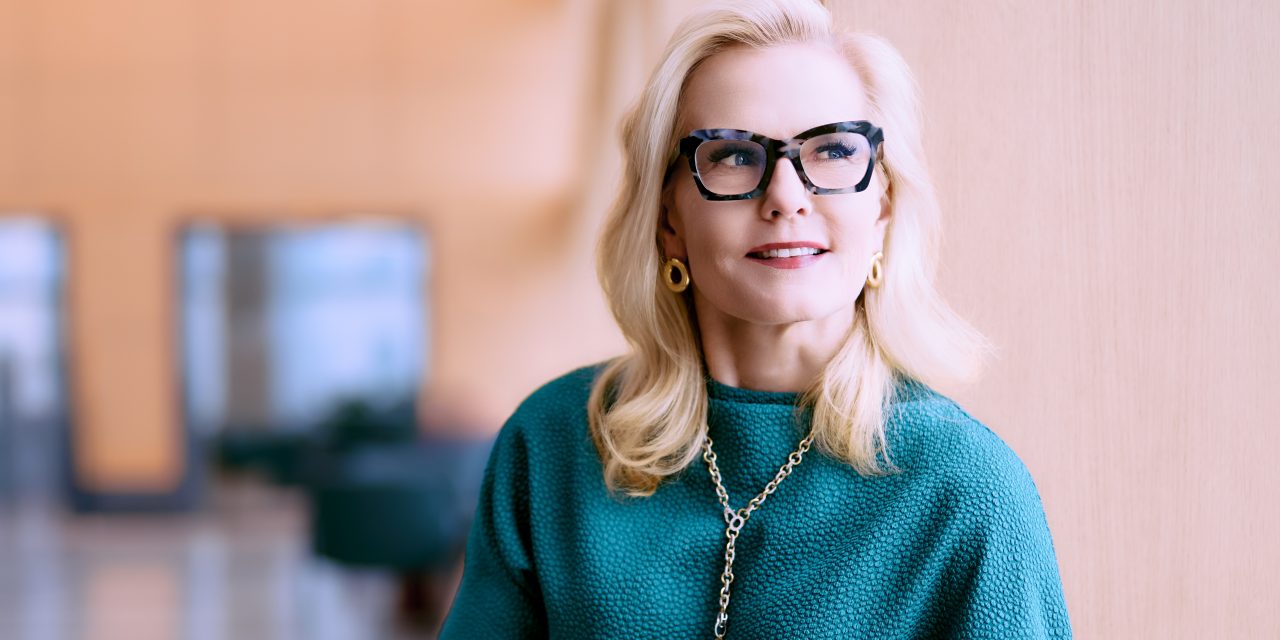
How a last-minute decision to attend Milton helped shape Christina Minnis ’83 into a Goldman Sachs leader, champion squash player, and resilient mentor.
By Kara Baskin
Photographs by Brad Trent
When it was time for Christina Minnis ’83 to choose a high school, the plan seemed settled: She would follow family tradition and board at Phillips Academy Andover, her dad’s alma mater. Then, at the last minute, everything changed.
The family had recently moved north from Houston, Texas. Her younger brother was still at home. The logistics of boarding school suddenly felt heavier. Her dad looked at her and asked a simple question: Would you rather stay close by?
The answer reshaped her future.
Minnis enrolled at Milton Academy as a day student, commuting from nearby Dedham. What initially felt like a practical family decision proved influential in ways she couldn’t have imagined: sharpening her confidence, expanding her worldview, and setting her on an athletic and professional path to become a champion squash player and one of the most experienced bankers in the country.
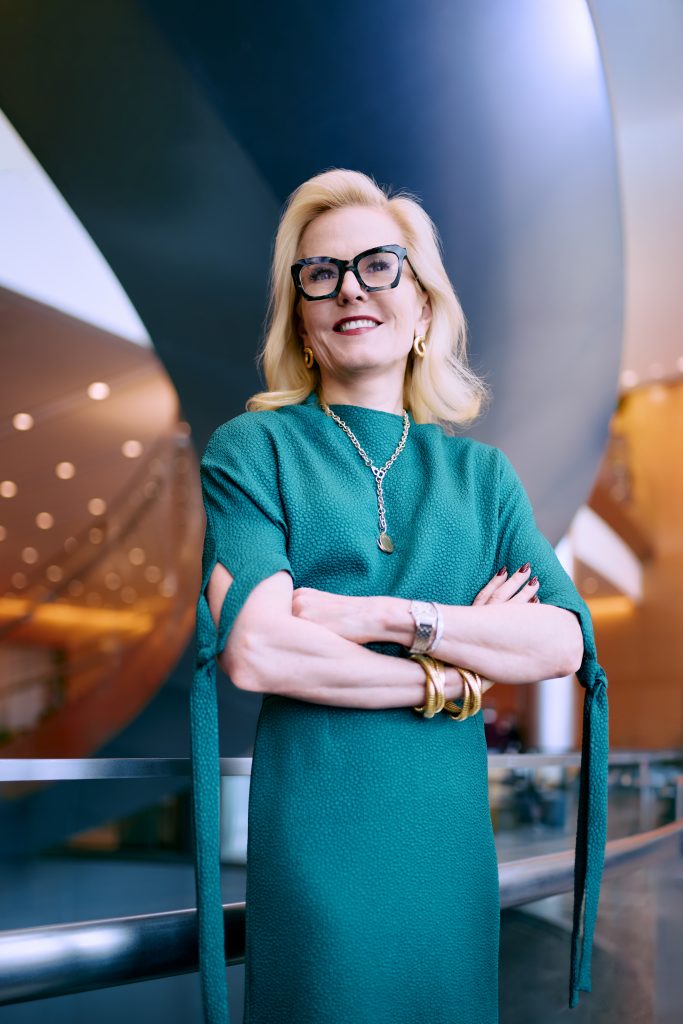
Today, she brings the traits she honed at Milton to a worldwide financial stage. Minnis was recently named the first global head of the Alternative Origination Group, and global head of credit and asset finance and head of global acquisition finance within Goldman Sachs’ newly created Capital Solutions Group. With more than $625 billion in alternative assets and $188 billion in private credit assets, Goldman Sachs is a top six alternatives player globally.
Minnis has been at the firm for 28 years and a partner since 2008. She operates at what she calls the “convergence of public and private markets,” advising clients on some of the industry’s most complex capital challenges. She works with corporations, financial sponsors, and alternative asset managers to design creative financing structures—whether that means funding leveraged buyouts or massive AI-driven infrastructure projects, or helping an industrial company finance billions of dollars in inventory while preserving its credit rating.
“Most of the role is about coming up with capital solutions,” she explains. “It’s about connecting dots across the firm and finding the most effective structure for the client.”
While the scale of the work inspires her, the people ground her. Minnis started at Goldman Sachs in 1998; her newest high-profile role is the apex of a decades-long career predicated on enduring relationships.
“I love getting close to clients, solving their problems, becoming their trusted adviser. It’s rewarding when someone says, ‘I have a big problem, and I don’t trust anybody but Goldman Sachs.’ It gets me every time,” she says.
Mentorship is also central to her leadership style, shaped by her own experience with mentors who were candid, demanding, and unvarnished.
“The best mentors are not comfortable relationships,” she says. “They’re honest ones.”
At Milton, one particularly demanding English teacher left a lasting mark—not because she praised Minnis, but because she doubted her.
“She told me she didn’t think I could do something,” Minnis recalls. “It rubbed me the wrong way. I decided I was going to prove her wrong. And I did.”
That instinct—to respond to skepticism with resolve—became a defining trait.
“Any time someone said, ‘You can’t do this,’ it struck a chord,” she says. “It taught me resilience. You get cut from a team, you lose a match, and you learn that you own your outcomes. If you don’t have the best forehand, it’s nobody’s fault but your own.”
She tries to offer the same direct feedback to those she manages, even when it’s difficult.
“People telling you you’re amazing doesn’t do anything for your growth,” Minnis says. “Constructive feedback is hard to get.”
Her reputation for honesty and tenacity has landed her at the top of the Forbes 50 Over 50 and American Banker’s Most Powerful Women in Finance lists.
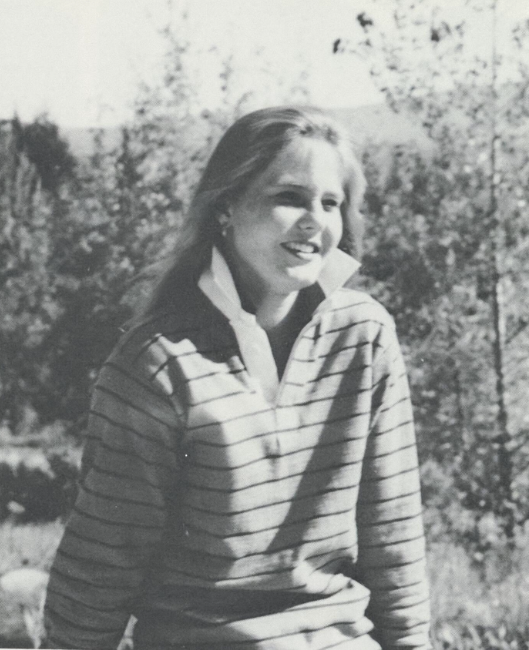
Christina Minnis ’83 in her Milton yearbook
Those seeds were planted at Milton, where she welcomed new challenges with steadiness and optimism. As a high-schooler, she played three varsity sports—field hockey, squash, and tennis—each providing an early lesson in time management, grit, and focus. Athletics, she says, became a strategy to harness her energy and build toughness.
“Sports were a huge part of the essence of who I am,” Minnis says. “I’ve used competitive sports as a way to channel my focus and learn resilience.”
That mindset has guided her ever since.
Squash, in particular, entered her life almost by accident. The captain of the field hockey team noticed Minnis was a tennis player and asked whether she’d ever tried it. She hadn’t, aside from a single lesson at the Yale Club when she was 10 years old. Still, she took the suggestion seriously and pushed herself to try out.
That nudge changed everything.
Minnis went on to play Division I squash at Yale, where she became an All-American, served as team captain her senior year, and earned a national ranking.
“If that captain hadn’t told me to try squash,” she says, “my entire path would look different.”
Milton shaped her beyond athletics. She played piano—a connection to her father, a pianist—and found space for the arts alongside academics and sports. As a freshman, she landed a role in A Midsummer Night’s Dream, building confidence onstage that would ultimately translate into authority speaking in boardrooms and conference halls.
“That play was the beginning of me being comfortable performing,” she says. “It mattered more than I realized at the time.”
She took other chances, too: Minnis was one of just a handful of Milton students who opted to spend part of sophomore year abroad at the Lycée International de Saint-Germain-en-Laye in Paris. Although exchange programs are popular now, they were just getting off the ground in the early 1980s, she recalls. But Minnis was determined to see the world.
“It completely changed my lens. My mother was Austrian, and my dad was in the Navy during World War II. I came from an international family, and it was important to my dad that I do a spring abroad,” she says.
She spent several weeks in Saint-Germain alongside French students, where she enjoyed the clatter of conversation—“my classmates all spoke five languages,” she recalls—and the exposure to worlds beyond her own.
“The trip taught me to be open-minded, to experience all walks of life,” she says. “I still have my Métro card from 1984.”
The exchange period also prepared her for what came next. By senior year, Minnis had been admitted to Yale, Princeton, Dartmouth, and Cornell. She nearly mailed her acceptance to Princeton, despite wondering about Yale. New Haven felt more daunting and urban. In the end, that uncertainty propelled her.
“Yale was bigger, broader, and more intimidating” at the time, she says. “I didn’t want to live my life wondering if I could have done well there.”
That willingness to push herself, to take the risk, was essential decades later, during the financial crisis of 2008, when she helped steer Goldman Sachs through uncharted waters, something she’s still proud of today.
“That mindset has guided how we think about public and private markets. During the financial crisis, when the term-loan market was dislocated and pricing made little sense, we leaned in—buying high-quality assets at deep discounts. That effort not only performed well; it helped seed what became one of the firm’s core private-credit businesses,” she explains.
“I’ve never seen private and public markets as competitors. I see them as innovation, an expansion of capital formation that ultimately benefits clients. There are moments when one market is more effective than the other, but they will coexist and grow together. Especially as we face trillion-dollar infrastructure needs, we’ll need every market, every idea, and a willingness to rethink the old playbook.”
Outside of work, Minnis has hung up the squash racket and now focuses on skiing and golf.
She serves on the board of Susan G. Komen, focusing on raising money for breast cancer research, a cause that reflects personal conviction and a belief in paying forward opportunity.
“I lost a college roommate to the disease,” she says. “I feel strongly that we need to see more investment in women’s health.”
As the mom of three grown children (her eldest, Andrew, is also an investment banker at Goldman Sachs), she’s also passionate about juvenile mental health. Minnis serves on the board of the Child Mind Institute, focusing on juvenile mental health fundraising.
“This is the real pandemic: the mental health of our children,” she says.
Asked what she’s most proud of, her answer comes without hesitation. Not Milton. Not Yale. Not Goldman Sachs; not squash.
“My marriage and my kids,” she says.
Minnis describes her husband, Jamie, and children as her grounding forces, the constants amid a career defined by motion. She met Jamie on the squash court at the University Club of Chicago in her early 20s—he’s the stronger player, she admits—and they’ve been married for 36 years.
“We got married at 25. I was the first of my friends to get married, and I didn’t expect it,” she says, laughing.
Looking back, she sees a clear throughline from her Milton days to her leadership today: that signature willingness to step into the unknown, the discipline learned on the court, and the confidence to speak up, even when unsure.
“You have to be comfortable stepping outside your comfort zone if you want to evolve,” she says.
Kara Baskin is a journalist for The Boston Globe and a contributing editor at Boston magazine, where she covers parenting, education, and modern family life. She also writes for institutions including Harvard University and MIT, and hosts an entrepreneurship-themed podcast for Babson College.