

In the News
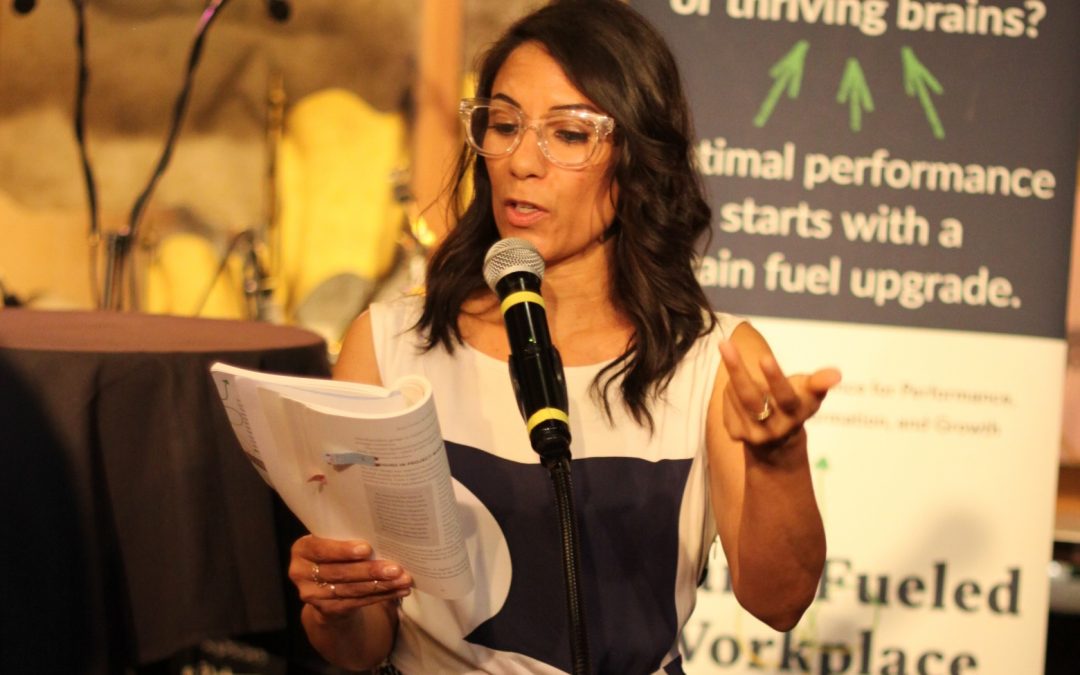
Rewiring the Way We Work
When Chaela Volpe ’95 advises executives, she doesn’t just talk strategy—she talks neuroscience. Her new book, Brain-Fueled Workplace: Harnessing Neuroscience for Performance, Innovation, Transformation, and Growth (IntegraComm), introduces an innovative solution that’s helping organizations replace burnout and breakdown with clarity and connection. We sat down with Chaela to discuss what it means to build a healthier workplace where thriving employees achieve exceptional results.
WHAT SPARKED YOUR INTEREST IN WRITING THIS BOOK?
When I was pursuing my master’s degree at NYU, I was hired in my first global leadership role to create a communication strategy for a digital transformation. At the same time, my capstone thesis project was to identify a corporate challenge, develop a research-backed solution, and present it as a contribution to corporate communication. I designed a method for delivering complex strategic initiatives in the workplace. In subsequent jobs, I found dysfunction and rigid adherence to illogical silos undermining performance. The integrated approach I created was more efficient, created alignment, drove productivity, and reduced stress. But there was no place for it in most organizations. So, I tested and refined it around the world over many years until I could define where it fits in and how it can be put into practice.
WHY IS LOW ENGAGEMENT AND POOR COMMUNICATION AROUND CHANGE SUCH A SERIOUS PROBLEM IN THE WORKPLACE?
The data is alarming: Low engagement costs the global economy almost $9 trillion a year; 76 percent of employees are affected by burnout; and 88 percent of transformations fail. We can’t keep going that way. Most people don’t understand what drives these negative trends, blaming managers, leaders, and systems. But what’s underneath is a failure to communicate with employees in a way that helps them engage properly in their work to navigate and drive change. We can fix this by closing a major gap in modern businesses through the introduction of a new business function called Strategy Enablement.
HOW DOES THIS BUSINESS FUNCTION OPERATE?
Strategy Enablement is powered by something I named The Performance Optimization Planning Model (The POP Model™). Grounded in neuroscience, it reframes and fuses strategic communication, engagement, and change management into one cohesive discipline that supports cognitive processes. It also pioneers the integration of communication planning into project planning, finally giving people what they need to deliver complex initiatives for innovation, transformation, and growth.
WHY WAS IT IMPORTANT TO BRING PSYCHOLOGY INSIGHTS INTO YOUR APPROACH?
It’s such an essential aspect. If everyone’s left bruised and battered at the finish line of big projects, can we call them successful? Cognitive neuroscientists use insights and models from psychology to understand brain processes and behavior, like the Kübler-Ross Change Curve and its five stages of grief. It transfers to business and to the way employees respond to news of change they perceive as disruptive or threatening. It prioritizes elevating employees’ experience of the change curve to optimize emotions, performance, and outcomes.
DOES YOUR MODEL WORK FOR ANY KIND OF ORGANIZATION AND EMPLOYEES OF ANY AGE?
Yes! Everyone’s brain, in any role or any industry, needs the same thing: to not be overwhelmed, not be plunged into uncertainty, and to have clarity and direction. We get our sense of purpose from our work, and if we don’t know what we’re supposed to do, or feel excluded from planning, conversations, and decisions, we cannot make a meaningful contribution. This takes a toll on our mental health.
WAS THERE ANYTHING FROM YOUR TIME AT MILTON THAT PREPARED YOU FOR THIS CHAPTER OF YOUR CAREER?
Absolutely! Milton gave me a wonderful foundation for critical thinking, writing, and public speaking. When I started writing the book, I wanted to pour out ideas without following any structural guidelines. I had this sort of resistance to following an outline. But even without one, my ideas were well structured because of the training I got at Milton. Without that foundation, I would not have believed I could write an entire (coherent) book. And I definitely credit my comfort as a professional speaker to my time on the speech team and in countless plays, where I learned technique and gained confidence at a critical age.
For more information, visit thepopmodel.com.
By Laura Grunberger
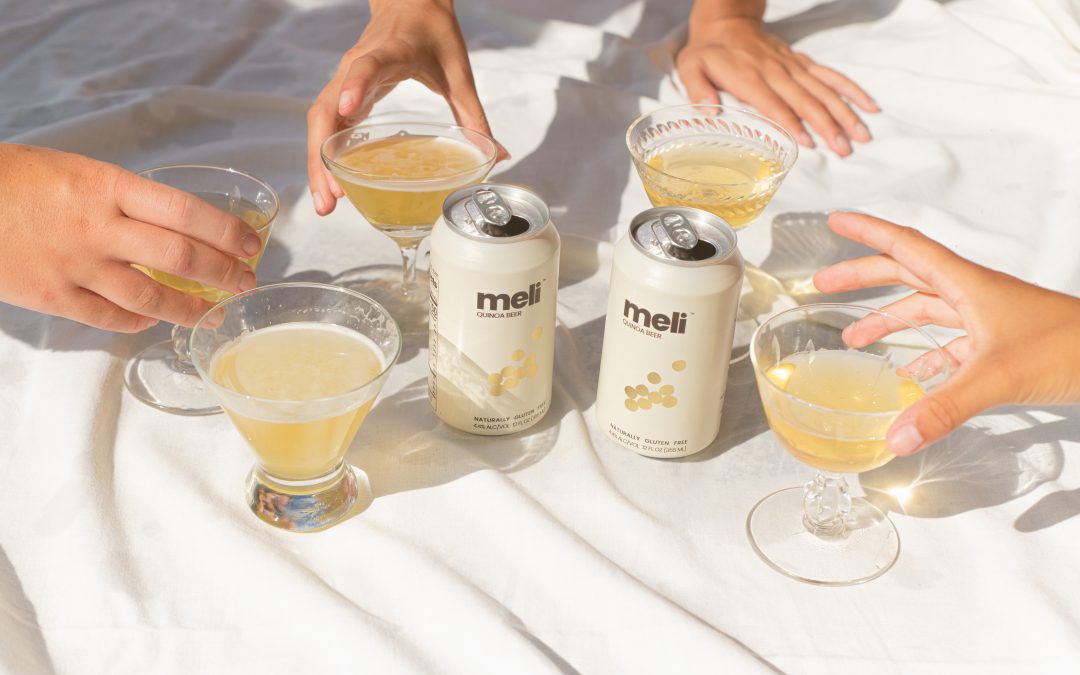
A Brew All Its Own
 Samara Oster ’09 never planned to become a brewer. A former performer with a career in communications, she was pursuing her MBA when a trip to Peru sparked the idea for a beer unlike any other: one brewed entirely from quinoa, naturally gluten-free, and made with just four clean ingredients. Today, her Boston-based company, Meli, ships to 45 states, is on shelves in two major grocery chains across Massachusetts, and is making inroads in a male-dominated industry not known for being particularly health-conscious. Below, Samara reflects on building a brand from scratch, finding balance between health and indulgence, and the Milton skills that gave her the confidence to take a less traditional path.
LAUNCHING A NEW PRODUCT IS A BIG DEAL, AND TO BE ON THE SHELVES AT TRADER JOE’S AND WHOLE FOODS IS HUGE. HOW DID IT FEEL THE FIRST TIME YOU SAW YOUR PRODUCT THERE?
Pretty wild. I’ve had a few moments where I’ve seen a dream realized—like when we first got on a restaurant menu, which felt amazing. But I never imagined being on the shelves of national grocers. The most special moment was seeing Meli at the Trader Joe’s in Brookline, where I grew up. I remember that store opening when I was a kid, and my family shopped there every weekend. It’s surreal to see my product there now.
YOU MAJORED IN ENGLISH AND WERE CONSIDERING A CAREER IN THE ENTERTAINMENT INDUSTRY. WAS THE PIVOT INTO PRODUCT DEVELOPMENT AND BREWING A STEEP LEARNING CURVE?
Huge. I fell into it through an entrepreneurship class at MIT. We were split into breakout rooms by industry, and I landed in “food and beverage.” I threw out this idea I’d had years before, when I tasted a quinoa beer while on vacation in Peru. My classmates liked it enough to keep working on it for another semester. Over time, with the help of food-science Ph.D.s, it became a real product. After graduation, I was working at a media startup that was winding down. I realized I could either get a “real job” or put my energy into this project. I dove in, learning everything—from how to talk to brewers and understand their equipment to the complexities of alcohol distribution, and now, retail grocery chains.
WHAT HAVE YOU LEARNED ABOUT YOURSELF AS AN ENTREPRENEUR?
I’ve learned that risk tolerance is a muscle. I used to think I was risk-averse, but entrepreneurship forces you to adapt. The more you face challenges, the less they shake you—though I still have my moments of doubt. Coming from Milton and later Harvard, I wasn’t trained to embrace failure. This process has taught me that failure can be healthy and necessary for growth.
DID YOU HAVE MOMENTS WHEN YOU CONSIDERED GIVING UP?
Definitely. Production challenges are the toughest—brewing our product is complex, and mistakes can be costly. In those moments, I step back, gain perspective, and keep going. These days, what motivates me is hearing from customers who say they finally have a beer they can enjoy, often after years of going without due to health reasons.
HOW DID MILTON ACADEMY PREPARE YOU FOR THIS JOURNEY?
Milton taught me how to think—how to take complex material, make sense of it, and stand my ground in challenging conversations. That confidence has carried me through career pivots and uncomfortable situations.
MELI MERGES HEALTH CONSCIOUSNESS WITH ALCOHOL—TWO THINGS NOT OFTEN PAIRED. HOW DO YOU APPROACH THAT NARRATIVE?
My philosophy is “live and let live”—if someone chooses not to drink, great. But for those who do, it’s about balance and transparency. Every can of Meli has a full nutrition and ingredient label: water, hops, yeast, and ethically sourced organic quinoa—zero sugar and naturally gluten-free. We designed Meli to appeal to a broad audience, not just those with gluten intolerance. The feedback has been fantastic.
By Laura Grunberger

Gatorade Honors Joshua Partal ’25
Recognizing his leadership on and off the field, Gatorade named Joshua Partal ’25 its Massachusetts Boys Soccer Player of the Year. The title recognizes the top athletes in each state who perform at the highest level of their sports while “demonstrating high academic achievement and outstanding character in pursuit of living as a champion.”
Partal is the third Milton boys’ varsity soccer player to earn the honor in as many years and the fourth overall: Alfred Debah ’25 received it in 2024 and Kaan Inanoglu ’24 received it in 2023. Partal will play soccer at Stanford University, while Debah committed to Wake Forest University. Inanoglu, who transferred after his junior season, plays for Eintracht Frankfurt, an elite professional club in Germany, and has enrolled at Princeton.

Representing Milton on the World Stage
Sarina Miller ’26 gave this year’s student keynote address at the opening ceremony of the VEX Robotics World Championship in Dallas, Texas. Miller, a member of the VEX Student Advisory Board, delivered her speech to an audience of thousands.
Robotics is the perfect activity for young people with boundless curiosity who aren’t afraid to ask questions and learn from failures, Miller told the audience. “Since there is no simple roadmap to building the perfect bot, we need to iterate until we find what works. Questions are essential to that process. Robotics exists in the real world, where solutions are often messy and not realized in a single attempt. … The ‘aha’ moments come from our ability to go beyond what we know and explore the unknown.”
“Asking questions is an art form,” she continued. “Understanding how to take observations and transform them into thought-provoking questions is an important skill.”
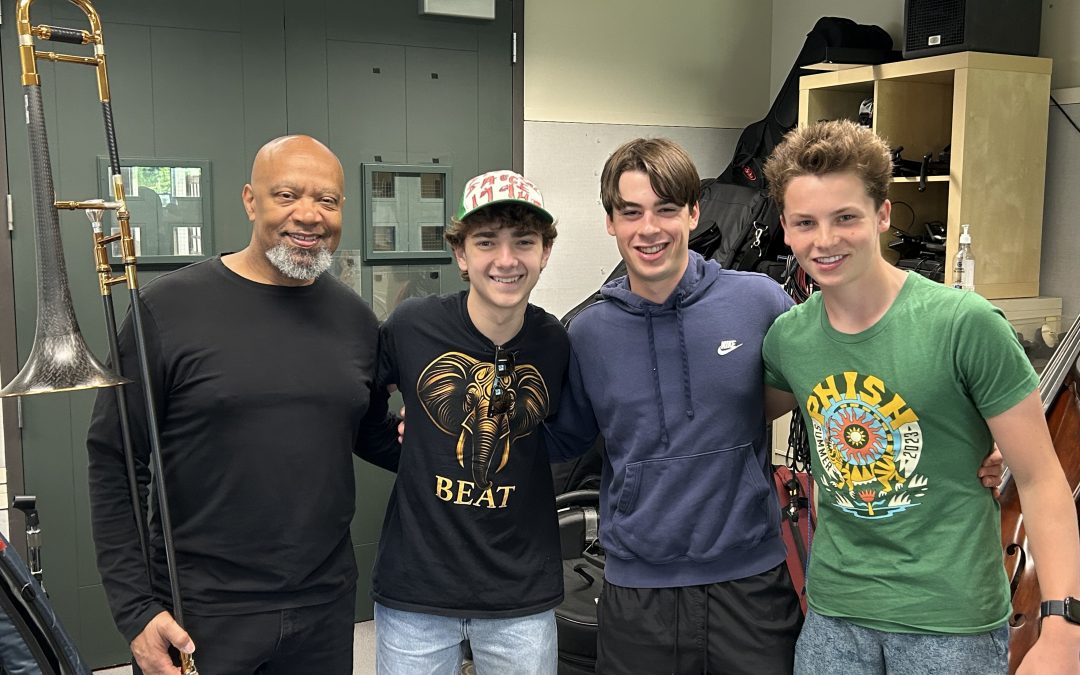
Greg Boyer Jams with Jazz Students
Renowned trombonist Greg Boyer paid a visit to jam with Upper School jazz students the day after playing at the House of Blues in Boston with Parliament Funkadelic. Boyer, who played for years with Prince, has also performed or recorded with Bootsy Collins, the Gap Band, Eric Benét, Hank Williams Jr., and Lynyrd Skynyrd. Pictured, from left: Boyer, Theo Goldberg ’27, Felix Stuart ’27, and Griffin Kelleher ’27.